
Our Lineage & Territory
The Inga of the Putumayo
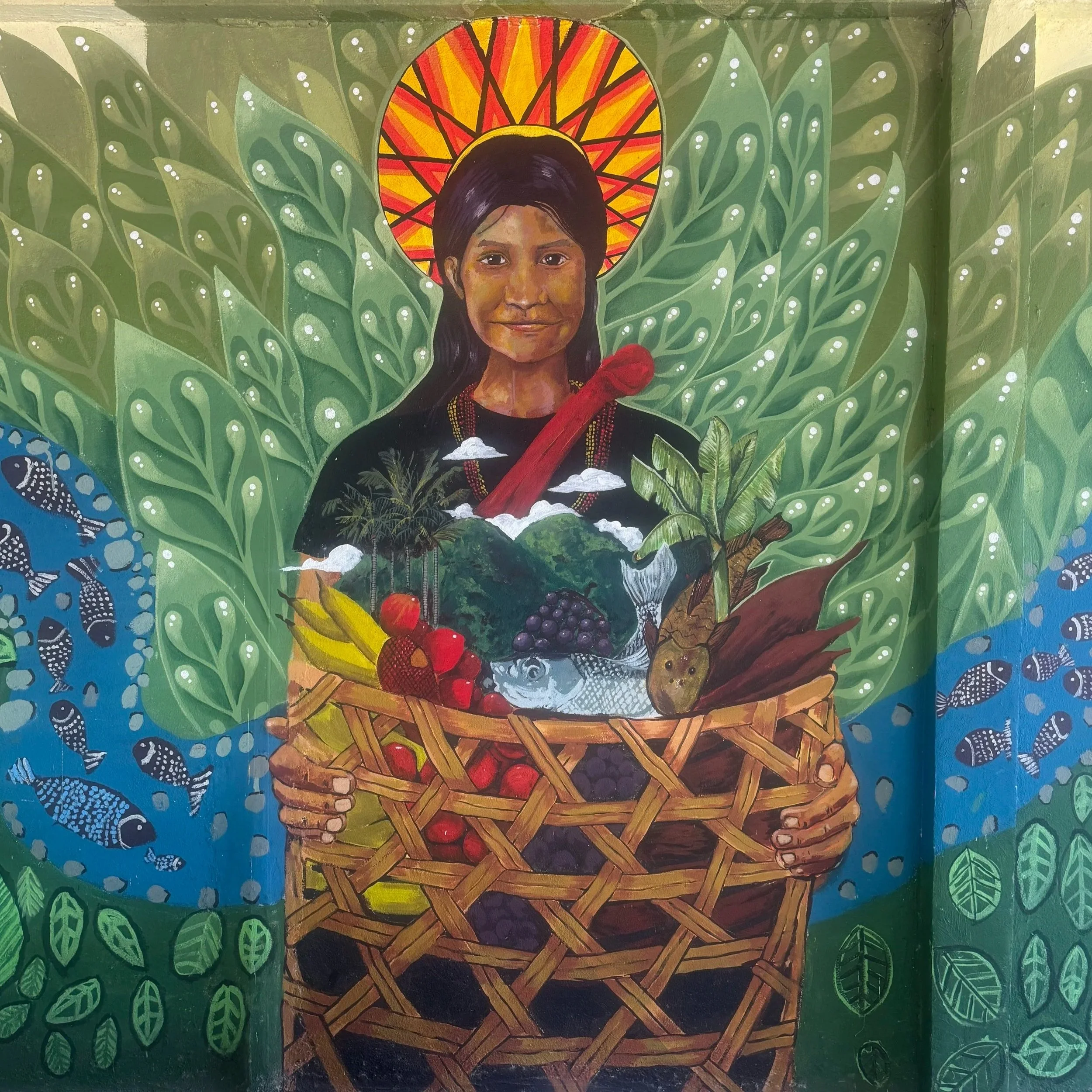
We are the Inga people, keepers of the Ambi (medicine) and speakers of Inga Kichwa. Our history is woven into the canopy of the Amazon and the roots of the Andes. We view ourselves not as owners of the land, but as its guardians.
Our Sacred Geography
Our village, San Miguel Castellana, is uniquely situated. The Río Alguacil brings cool, crystal-clear mountain run-off from the high highlands, which merges into the deep, mysterious currents of the Putumayo River. This balance of alpine clarity and lowland depth reflects our approach to healing: structured, deep, and purifying.
Our History: Resilience, Memory, and the Defense of Territory
The Crucible of the Putumayo
For decades, the Putumayo department was one of the most intense landscapes of the Colombian internal armed conflict. Because of its remote geography and dense jungle canopies, our ancestral home became a strategic zone heavily contested by left-wing guerrillas (such as the FARC), right-wing paramilitary blocks (such as the AUC Bloque Sur), and state military forces.
As indigenous people, the Inga of San Miguel Castellana never chose a side in this war. Instead, we chose the side of the territory, the rivers, and the medicine.
How Our Community Was Affected
Like many indigenous communities in the Amazon basin, the trauma of the conflict brushed against our daily lives in several distinct waves:
The Threat of Cultural Extinction: The violence and displacement across the region grew so severe that in 2009, the Constitutional Court of Colombia issued a historic warning (Auto 04 de 2009). The court officially declared the Inga people to be among the indigenous groups at imminent risk of physical and cultural extinction due to the armed conflict.
Confinement and Invisible Borders: Armed groups frequently imposed strict, illegal boundaries along the Putumayo River. This restricted our community's ability to travel freely by boat, cutting off families from neighboring villages, disrupting traditional trade, and making it highly dangerous to venture deep into the jungle to harvest wild Yagé or hunt.
The War on the Land (Aerial Fumigations): As part of state-led anti-drug initiatives (Plan Colombia), planes sprayed the herbicide glyphosate across the Putumayo. Even though our community strictly prohibited illicit crops within our resguardo (reservation), the chemical clouds drifted over our territory. These toxins poisoned our water sources, devastated our traditional chagras (food forests), and killed delicate medicinal plants.
The Parallel Front: Extractivism: Compounding the pressure of the war, our community faced an economic invasion. Multinational oil exploration projects moved to the very borders of San Miguel Castellana. For years, state entities frequently failed to acknowledge our presence to bypass our constitutional right to consulta previa (prior consultation), forcing us into long, ongoing legal battles to protect our sacred wetlands and spiritual sites from environmental degradation.
The Ancestral Shield: How We Survived
We did not survive this dark chapter of history through the use of weapons. We survived through the absolute strength of our culture and spiritual unity.
1. Los Cuidadores de la Amazonía (The Indigenous Guard)
To protect our village from the incursions of armed actors, our traditional authorities mobilized our youth and elders into the Guardia Indígena, known locally as the Cuidadores de la Amazonía (Guardians of the Amazon). Armed only with their bastones de mando (wooden staffs of spiritual authority), these peaceful, unarmed guardians patrolled our borders, protected our youth from forced recruitment, and maintained the legal autonomy of our territory.
2. The Sanctuary of the Maloka
Throughout the worst years of the conflict, the Maloka remained an inviolable sanctuary. When tension and fear gripped the daytime hours, our community gathered at night around the Taita and El Remedio (Yagé). The medicine gave our leaders Suma Iuai (Good Thinking)—the mental clarity needed to navigate complex political threats without succumbing to violence or betrayal. Yagé was our medicine for grief, our guide for communal survival, and our anchor to ancestral peace.
Entering a Territory of Peace
Today, the confluence of the Putumayo and the Alguacil is a place of profound peace, recovered through the resilience of the Inga people.
When your group travels to San Miguel Castellana, you are walking on land that has been fiercely and lovingly defended. The pure medicine you will drink exists today because our elders refused to let the chaos of the modern world corrupt their lineage. We ask that all visitors enter our home with deep awareness of this history, honoring the struggle that makes your healing journey possible.
Reclaiming Our Identity After the Silence
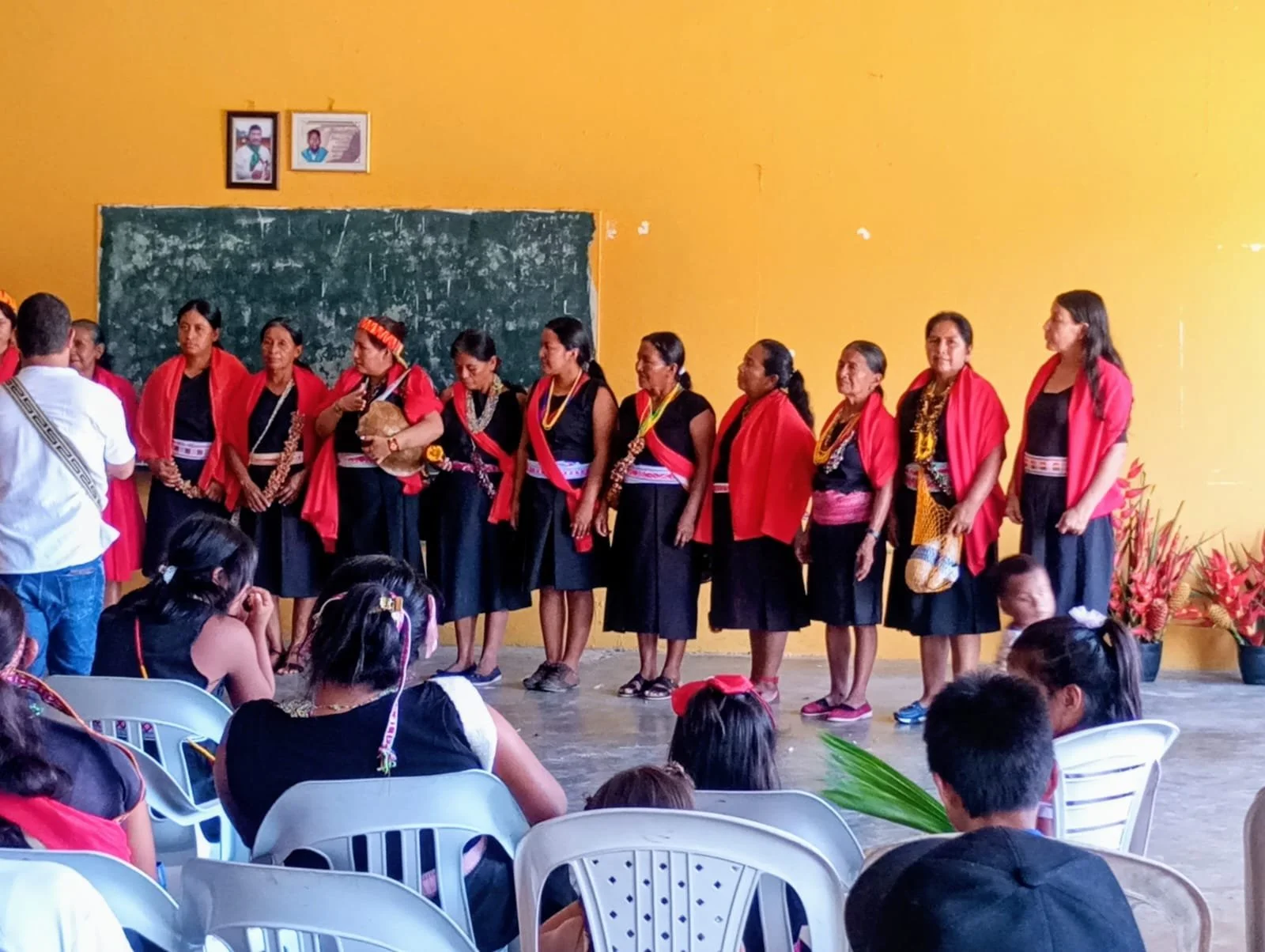
For decades, the violence of the armed conflict forced our traditional songs to a whisper and our looms to sit quiet. But culture is like the jungle—even after a fire, the roots wait beneath the soil for the rain.
Today, San Miguel Castellana is experiencing a profound cultural renaissance. Our youth are picking up the flutes of their grandfathers, and our women are once again weaving our history into bright threads. When your group visits us, you are not just witnessing a preserved past; you are celebrating a vibrant, living resurgence of a people reclaiming their joy.
1. The Art of Memory: Woven Chumbes and Chaquiras
Our crafts are not souvenirs; they are texts. Because our language, Inga Kichwa, relies heavily on oral tradition, our women historically wove our history, cosmologies, and visions into physical form.
The Inga Chumbe (Sacred Sashes)
The Chumbe is a traditional woven belt that serves as an "art of memory". Woven using backstrap looms, our women "weave with their minds" to map out complex geometric matrixes (churos).
The Symbols: Every line tells a story—the flow of the Putumayo river, the tracks of a jaguar, or a vision received in the Maloka.
The Medicine of Protection: Grandmothers weave these sashes to wrap around the bellies of newborn babies and the waists of women to protect their physical and spiritual core.
The Language of Chaquira (Beadwork)
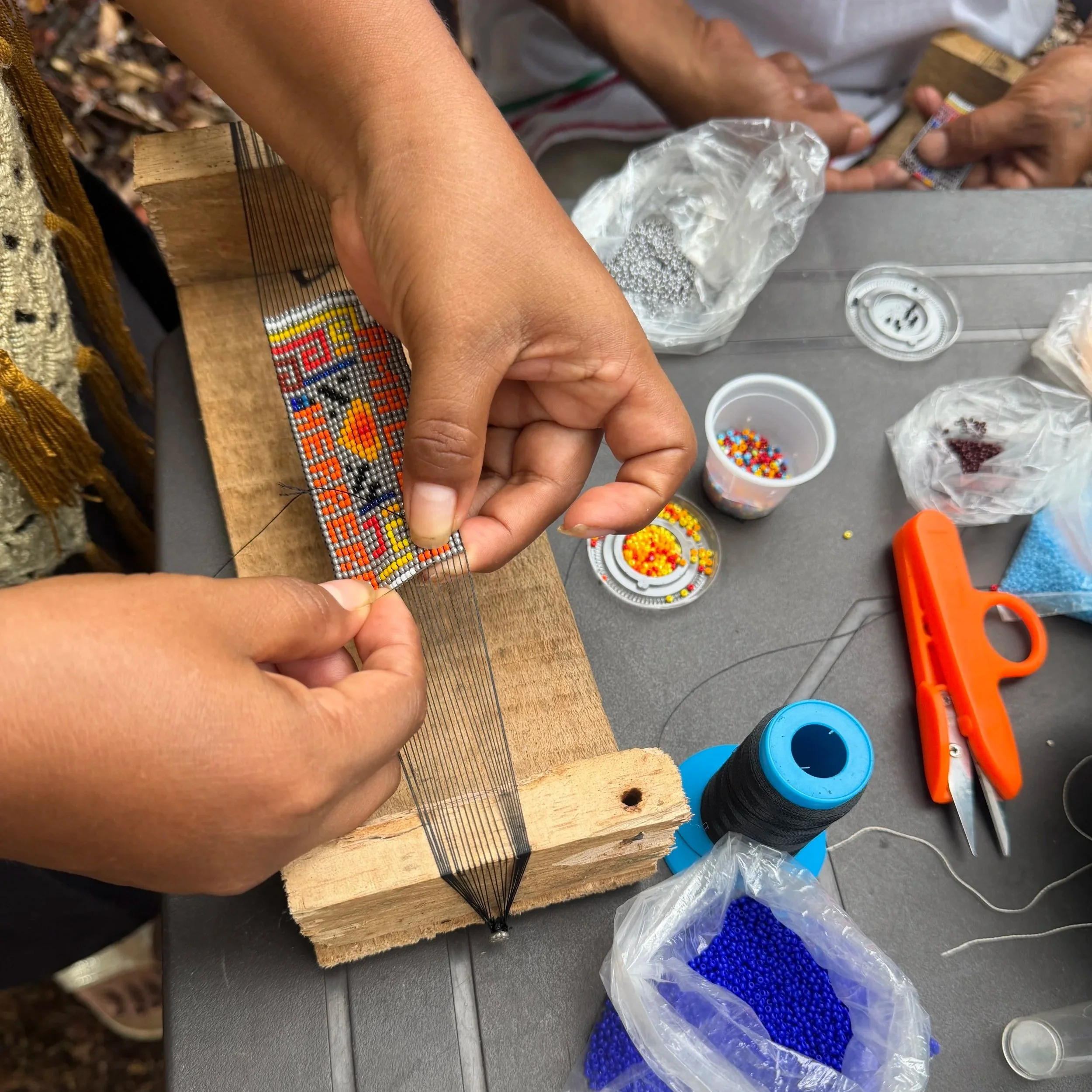
The Inga have become national references in Colombia for the art of chaquira (glass beadwork). These intricate, brightly colored necklaces, bracelets, and chest-pieces are wearable maps of our medicinal visions. The brilliant blues reflect the clarity of the Río Alguacil, the deep blacks hold the protective space of the night ceremony, and the gold represents the dawn of healing.
2. The Sound of the Confluence: Ancestral Music
Music is the inseparable companion of El Remedio (Yagé). It is the bridge between the physical world and the spiritual architecture of the medicine. In San Miguel Castellana, the rhythm of our music is waking up across generations.
Traditional Instruments
The Pinkullo and Quena: High-pitched wooden flutes that mimic the wind through the jungle canopy and the calls of sacred birds. Their melodies guide the mind through intense visions during the ceremony.
The Bombo (Drum): The heartbeat of the community. Made from local wood and animal hides, the steady, deep rhythm grounds the collective energy when the medicine runs deep.
The Charango and Guitar: Strings brought into our traditional music to add celebratory joy, honoring Suma Kausai (Good Living).
From Ceremonial Icaros to Communal Celebration
While the Taitas sing sacred icaros (healing songs) during the dark hours of the night to direct the healing energies, the daytime brings a different kind of music. The youth collective of San Miguel Castellana has begun reviving traditional festive rhythms. They are transforming what was once a quiet village under the shadow of conflict into a vibrant space of song, dance, and laughter.
Why This Matters for Your Group
When your collective sits with us, you are directly supporting this cultural awakening.
Direct Patronage: You will have the opportunity to purchase chumbes and chaquiras directly from the families who make them, ensuring 100% of the economic benefit stays within the village.
Cultural Exchange Workshops: Groups can request a dedicated afternoon learning the basics of Inga weaving, or sitting by the river to hear the elder musicians explain the spiritual meaning behind the flute melodies.
"To buy a piece of our art or to listen to our flutes is to say to our youth: Your identity is beautiful. Your culture has value. Keep singing."